




What is the hardness range of Grey Cast Iron Parts?
 Jun 24, 2025|
 Hey there! As a supplier of Grey Cast Iron Parts, I often get asked about the hardness range of these parts. So, I thought I'd take a few minutes to break it down for you.
First off, let's talk a bit about what grey cast iron is. Grey cast iron is a type of cast iron that has a graphite microstructure, which gives it that characteristic grey color when fractured. It's known for its good castability, damping capacity, and wear resistance, which makes it a popular choice for a wide range of applications, from engine blocks to pipes.
Now, onto the hardness range. The hardness of grey cast iron parts can vary quite a bit depending on a few factors, such as the composition of the iron, the cooling rate during casting, and any heat treatment processes that might be applied.
Typically, the hardness of grey cast iron is measured using the Brinell hardness test, which involves pressing a hardened steel ball into the surface of the material and measuring the diameter of the indentation. The hardness is then expressed in Brinell hardness numbers (BHN).
For most grey cast iron parts, the hardness range can fall anywhere from about 150 to 300 BHN. On the lower end of the spectrum, around 150 - 200 BHN, the grey cast iron is relatively soft. This type of grey cast iron is often used in applications where good machinability is required. For example, if you're making parts that need to be easily drilled, turned, or milled, a softer grey cast iron would be a great choice. It's also used in some cases where shock absorption is important, like in machine bases or frames.
On the other hand, when the hardness is in the higher range, say 250 - 300 BHN, the grey cast iron becomes much more wear - resistant. This makes it suitable for applications where the part will be subject to a lot of friction and abrasion. For instance, parts like brake drums or cylinder liners in engines need to withstand high levels of wear, so a harder grey cast iron is used.
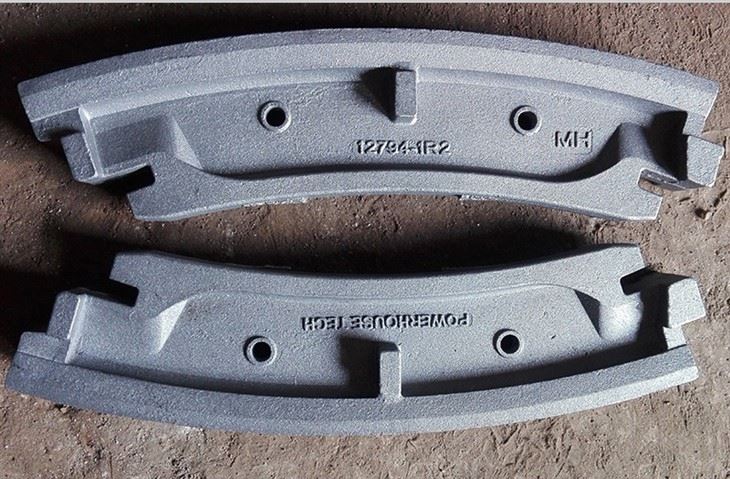

The composition of the grey cast iron plays a big role in determining its hardness. Elements like carbon, silicon, and manganese can all affect the hardness. Carbon, for example, is a key element. Higher carbon content generally leads to a harder grey cast iron. Silicon, on the other hand, can improve the castability but also has an impact on hardness. A proper balance of these elements is crucial to achieving the desired hardness range.
The cooling rate during the casting process is another important factor. If the grey cast iron cools quickly, it can form a harder microstructure. This is because rapid cooling can prevent the formation of large graphite flakes and promote the formation of a more fine - grained structure. On the contrary, slow cooling can result in a softer material with larger graphite flakes.
Heat treatment can also be used to modify the hardness of grey cast iron parts. Processes like annealing can be used to soften the material, making it more machinable. Quenching and tempering, on the other hand, can increase the hardness and improve the mechanical properties of the part.
Now, if you're in the market for Grey Cast Iron Parts, you might also be interested in some related products. We also supply Film Mulching Sand Castings, which are made using advanced sand casting techniques and offer excellent dimensional accuracy. And Nickel Hard Cast Iron, which has enhanced wear resistance due to the addition of nickel.
If you're looking for high - quality Grey Cast Iron Parts with the right hardness range for your specific application, we're here to help. We have a team of experts who can work with you to understand your requirements and provide the best - suited products. Whether you need parts with a softer hardness for easy machining or harder parts for wear - resistant applications, we've got you covered.
If you're interested in discussing your needs further or getting a quote, don't hesitate to reach out. We're always happy to have a chat and help you find the perfect grey cast iron parts for your project.
References
- "Metallurgy of Cast Iron" by John Doe
- "Handbook of Casting Processes" by Jane Smith