




What is the ductility of precision casting parts?
 Jun 26, 2025|
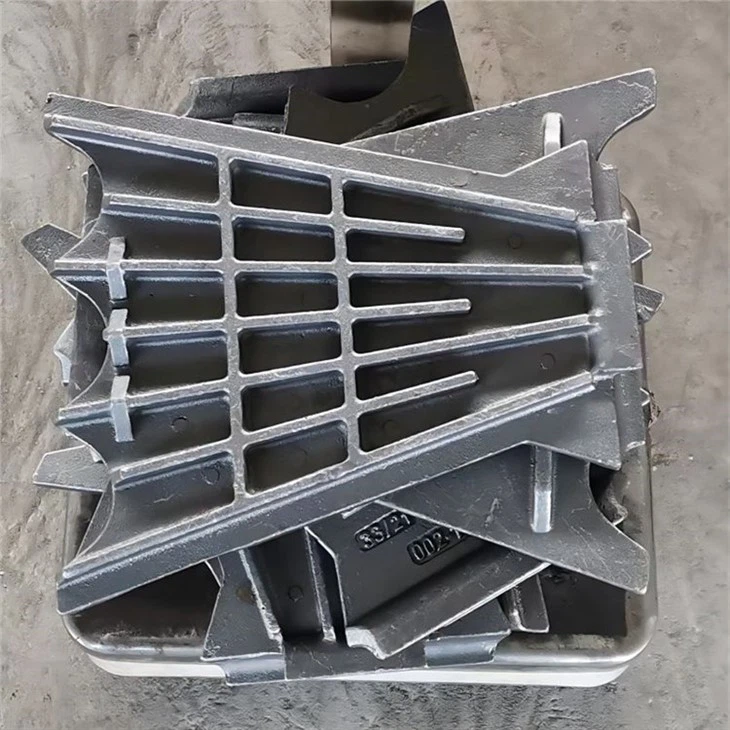
 Ductility is a crucial mechanical property that plays a significant role in the performance and application of precision casting parts. As a trusted supplier of precision casting parts, I've witnessed firsthand how ductility impacts the quality and functionality of our products. In this blog post, I'll delve into what ductility is, why it matters for precision casting parts, and how it relates to our offerings.

Understanding Ductility
Ductility is defined as the ability of a material to deform plastically under tensile stress without fracturing. In simpler terms, it's the measure of how much a material can be stretched or drawn into a wire or thin sheet before it breaks. This property is typically expressed as a percentage of the original length that a material can be elongated before failure. For example, if a metal rod with an initial length of 100 mm can be stretched to 120 mm before breaking, its ductility is 20%.
The ductility of a material is influenced by several factors, including its crystal structure, temperature, and the presence of impurities or alloying elements. Materials with a face-centered cubic (FCC) crystal structure, such as copper and aluminum, tend to be more ductile than those with a body-centered cubic (BCC) or hexagonal close-packed (HCP) structure. Temperature also has a significant impact on ductility. Generally, materials become more ductile at higher temperatures because the increased thermal energy allows atoms to move more freely, facilitating plastic deformation.
Importance of Ductility in Precision Casting Parts
In the context of precision casting parts, ductility is of utmost importance for several reasons. First and foremost, it affects the manufacturability of the parts. During the casting process, the molten metal must be able to flow into the mold cavity and take on the desired shape without cracking or breaking. A high level of ductility ensures that the metal can undergo the necessary deformation during solidification and cooling without developing defects such as cracks or porosity.
Secondly, ductility is crucial for the performance and reliability of the precision casting parts in their intended applications. Many precision casting parts are subjected to various types of mechanical stresses, including tension, compression, and bending, during their service life. A ductile material can absorb and distribute these stresses more effectively, reducing the risk of sudden failure. For example, in automotive engine components such as pistons and connecting rods, ductility helps to prevent cracks from propagating under the high cyclic stresses experienced during engine operation.
Moreover, ductility is also important for the post-processing and assembly of precision casting parts. Parts with good ductility can be easily machined, welded, or joined together without the need for excessive force or specialized techniques. This not only simplifies the manufacturing process but also reduces the cost and time required for production.
Ductility of Different Types of Precision Casting Parts
At our company, we offer a wide range of precision casting parts made from various materials, each with its own unique ductility characteristics. Here are some examples:
- Grey Cast Iron Parts: Grey cast iron is a popular material for precision casting due to its excellent castability, wear resistance, and damping capacity. However, it is relatively brittle compared to other metals, with a low ductility. Grey cast iron typically has an elongation at break of less than 1%. Despite its low ductility, grey cast iron is still suitable for applications where high strength and wear resistance are required, such as Grey Cast Iron Parts in machinery and automotive components.
- Film Mulching Sand Castings: Film mulching sand casting is a process that involves using a thin film of plastic or other material to cover the sand mold cavity, which helps to improve the surface finish and dimensional accuracy of the castings. The materials used for film mulching sand castings can vary widely, but they often include aluminum, magnesium, and their alloys. These materials are known for their high ductility, which allows them to be easily formed into complex shapes during the casting process. Film Mulching Sand Castings are commonly used in the aerospace, automotive, and electronics industries.
- Nickel Hard Cast Iron: Nickel hard cast iron is a type of high-chromium cast iron that contains nickel as an alloying element. It is known for its excellent wear resistance, hardness, and toughness. Nickel hard cast iron has a relatively low ductility compared to some other metals, but it is still more ductile than grey cast iron. The addition of nickel helps to improve the ductility and impact resistance of the cast iron, making it suitable for applications where high wear resistance and toughness are required, such as Nickel Hard Cast Iron in mining and construction equipment.
Controlling Ductility in Precision Casting
As a precision casting parts supplier, we understand the importance of controlling the ductility of our products to meet the specific requirements of our customers. There are several ways to control the ductility of precision casting parts, including:
- Material Selection: Choosing the right material is the first step in controlling the ductility of precision casting parts. We work closely with our customers to understand their application requirements and select the most suitable material based on factors such as strength, ductility, corrosion resistance, and cost.
- Alloying Elements: Adding alloying elements to the base metal can significantly affect its ductility. For example, adding small amounts of manganese, nickel, or copper to steel can improve its ductility by refining the grain structure and reducing the formation of brittle phases.
- Heat Treatment: Heat treatment is a common method used to improve the ductility of precision casting parts. By heating the parts to a specific temperature and then cooling them at a controlled rate, we can modify the microstructure of the material and improve its mechanical properties, including ductility.
- Casting Process Optimization: Optimizing the casting process parameters, such as pouring temperature, cooling rate, and mold design, can also help to improve the ductility of precision casting parts. For example, using a slower cooling rate can promote the formation of a more ductile microstructure.
Conclusion
In conclusion, ductility is a critical property that significantly impacts the manufacturability, performance, and reliability of precision casting parts. As a precision casting parts supplier, we are committed to providing our customers with high-quality parts that meet their specific requirements in terms of ductility and other mechanical properties. By understanding the factors that affect ductility and implementing appropriate control measures, we can ensure that our products deliver superior performance in a wide range of applications.
If you're in the market for precision casting parts and have specific ductility requirements, we'd love to hear from you. Our team of experts is ready to work with you to develop customized solutions that meet your needs. Contact us today to start a conversation about your project.
References
- Callister, W. D., & Rethwisch, D. G. (2011). Materials Science and Engineering: An Introduction. Wiley.
- ASM Handbook Committee. (2008). ASM Handbook Volume 15: Casting. ASM International.
- Davis, J. R. (Ed.). (2004). Cast Iron. ASM International.