




What is the shear strength of Grey Cast Iron Parts?
 Nov 19, 2025|
 Grey cast iron is a widely used engineering material, known for its excellent castability, good machinability, and damping capacity. As a supplier of grey cast iron parts, understanding the shear strength of these components is crucial for both product design and customer satisfaction. In this blog, we will delve into the concept of shear strength, factors affecting it in grey cast iron parts, and its significance in various applications.
Understanding Shear Strength
Shear strength refers to the maximum amount of shear stress that a material can withstand before it fails in shear. Shear stress occurs when two parallel forces act in opposite directions on a material, causing it to deform or break along a plane parallel to the applied forces. In the case of grey cast iron parts, shear strength is an important mechanical property that determines their ability to resist forces that tend to cause sliding or cutting within the material.
The shear strength of a material is typically measured through a shear test, where a specimen is subjected to a shear force until failure. The shear strength is then calculated by dividing the maximum shear force by the cross - sectional area of the specimen in the plane of shear. For grey cast iron, the shear strength can vary depending on several factors, including its microstructure, chemical composition, and manufacturing process.
Microstructure and Shear Strength
The microstructure of grey cast iron plays a significant role in determining its shear strength. Grey cast iron consists of graphite flakes embedded in a matrix of ferrite, pearlite, or a combination of both. The graphite flakes act as stress raisers, which can reduce the overall strength of the material. When a shear force is applied, the graphite flakes can initiate cracks, which then propagate through the matrix, leading to failure.
The size, shape, and distribution of the graphite flakes can have a profound impact on the shear strength. Smaller and more uniformly distributed graphite flakes generally result in higher shear strength. This is because smaller flakes create fewer stress concentrations and are less likely to initiate cracks. On the other hand, large and coarse graphite flakes can significantly reduce the shear strength of the material.
In addition to graphite flakes, the matrix structure also affects the shear strength. Pearlite, which is a lamellar structure of ferrite and cementite, generally provides higher strength compared to ferrite. Therefore, grey cast iron with a higher proportion of pearlite in its matrix tends to have higher shear strength.
Chemical Composition and Shear Strength
The chemical composition of grey cast iron is another important factor that influences its shear strength. The main elements in grey cast iron include carbon, silicon, manganese, sulfur, and phosphorus.
Carbon is the most important element in grey cast iron as it forms graphite during solidification. The carbon content affects the amount and morphology of graphite flakes. A higher carbon content generally leads to more graphite flakes, which can reduce the shear strength. However, a certain amount of carbon is necessary to ensure good castability.
Silicon is also a key element as it promotes the formation of graphite and helps to control the graphite morphology. An appropriate amount of silicon can improve the shear strength by refining the graphite flakes and enhancing the matrix structure.
Manganese is added to grey cast iron to combine with sulfur and form manganese sulfide, which helps to improve the machinability and mechanical properties of the material. A proper manganese - to - sulfur ratio is important for maintaining good shear strength.
Sulfur and phosphorus are generally considered impurities in grey cast iron. High sulfur content can lead to the formation of iron sulfide, which can reduce the shear strength and cause hot cracking during casting. Phosphorus can form hard and brittle compounds, which can also have a negative impact on the shear strength.
Manufacturing Process and Shear Strength
The manufacturing process of grey cast iron parts can have a significant impact on their shear strength. The casting process, heat treatment, and machining operations all play a role in determining the final properties of the parts.
During the casting process, factors such as pouring temperature, cooling rate, and mold design can affect the microstructure and quality of the cast iron. A proper pouring temperature ensures good fluidity and filling of the mold, while a controlled cooling rate helps to achieve the desired microstructure. For example, a slower cooling rate can promote the formation of larger graphite flakes, which may reduce the shear strength.
Heat treatment can be used to modify the microstructure of grey cast iron and improve its mechanical properties. Annealing, normalizing, and quenching - tempering are common heat treatment processes. Annealing can relieve internal stresses and improve the machinability, while normalizing can refine the grain structure and increase the strength. Quenching - tempering can significantly increase the hardness and strength of the material, including its shear strength.
Machining operations can also affect the shear strength of grey cast iron parts. Improper machining parameters, such as excessive cutting forces or high cutting speeds, can cause surface damage and residual stresses, which can reduce the shear strength. Therefore, it is important to use appropriate machining techniques and parameters to ensure the integrity of the parts.
Significance in Applications
The shear strength of grey cast iron parts is of great significance in various applications. In automotive engines, grey cast iron is commonly used for cylinder blocks, cylinder heads, and brake drums. These parts are subjected to high shear forces during operation, and a sufficient shear strength is necessary to ensure their reliability and durability.
In the machinery industry, grey cast iron parts are used in gears, pulleys, and machine tool components. These components need to withstand shear forces generated by the transmission of power and motion. A high shear strength can prevent premature failure and ensure smooth operation of the machinery.
In the construction industry, grey cast iron pipes and fittings are used for drainage and sewage systems. These parts need to resist shear forces caused by soil movement, ground settlement, and external loads. A good shear strength can ensure the integrity of the pipeline system and prevent leaks and failures.

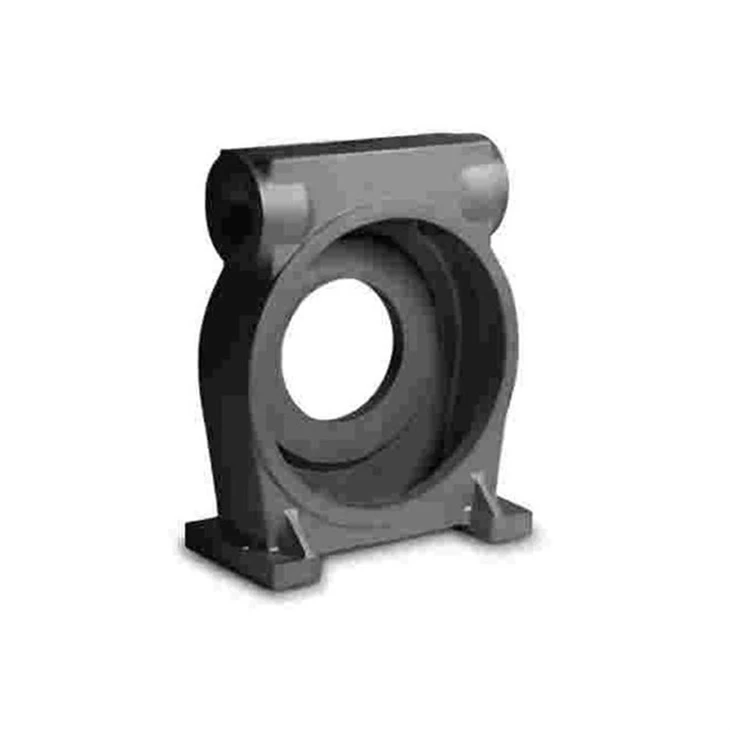
Our Products and Shear Strength
As a supplier of grey cast iron parts, we are committed to providing high - quality products with excellent shear strength. Our Ball Grinding Cast Iron Parts are designed to withstand the high shear forces generated during the grinding process. We use advanced casting techniques and strict quality control measures to ensure that the graphite flakes in our ball grinding cast iron parts are small and uniformly distributed, and the matrix structure is optimized for high strength.
Our Precision Casting Parts are manufactured with precise control of the chemical composition and manufacturing process. This allows us to achieve the desired shear strength and other mechanical properties for applications where high precision and reliability are required.
Our Film Mulching Sand Castings are also engineered to have good shear strength. The film mulching sand casting process helps to achieve a fine - grained microstructure and uniform distribution of graphite flakes, which contributes to the overall strength of the parts.
Contact Us for Purchase and Negotiation
If you are in need of high - quality grey cast iron parts with excellent shear strength, we invite you to contact us for purchase and negotiation. Our team of experts is ready to assist you in selecting the right products for your specific applications and providing you with the best solutions. We look forward to working with you to meet your needs and exceed your expectations.
References
- Callister, W. D., & Rethwisch, D. G. (2012). Materials Science and Engineering: An Introduction. Wiley.
- ASM Handbook Committee. (1987). ASM Handbook, Volume 1: Properties and Selection: Irons, Steels, and High - Performance Alloys. ASM International.
- Campbell, J. (2003). Castings. Butterworth - Heinemann.