




What is the elongation of Grey Cast Iron Parts?
 Jul 03, 2025|
Elongation is a critical mechanical property that measures the ability of a material to deform plastically before fracturing. When it comes to Grey Cast Iron Parts, understanding elongation is essential for both manufacturers and end - users. As a supplier of Grey Cast Iron Parts, I am well - versed in the significance of this property and its implications for various applications.
1. Basics of Elongation
Elongation is typically expressed as a percentage and is determined through a tensile test. In a tensile test, a specimen of the material is gradually pulled until it breaks. The initial length of the specimen is measured, and after the break, the length of the specimen is measured again. The difference between the final and initial lengths, divided by the initial length and multiplied by 100, gives the elongation percentage.
For Grey Cast Iron Parts, elongation values are generally quite low compared to other materials such as steel. Grey cast iron is a brittle material, and its internal structure plays a significant role in this characteristic. The graphite flakes present in grey cast iron act as stress concentrators. When a load is applied, these graphite flakes initiate cracks, which can quickly propagate through the material, leading to fracture with limited plastic deformation.
2. Factors Affecting the Elongation of Grey Cast Iron Parts
2.1 Chemical Composition
The chemical composition of grey cast iron has a profound impact on its elongation. Carbon is one of the most important elements. Higher carbon content generally leads to the formation of more graphite flakes. While graphite provides some beneficial properties such as good machinability and damping capacity, an excessive amount can reduce the elongation of the material.
Silicon is another key element. It promotes the formation of graphite and also affects the matrix structure of the cast iron. A proper balance of silicon can help improve the overall mechanical properties, including elongation to some extent. Other elements like manganese, sulfur, and phosphorus also influence the properties of grey cast iron. For example, sulfur can form iron sulfide inclusions, which can act as crack initiation sites and reduce elongation.
2.2 Cooling Rate
The cooling rate during the casting process is crucial. A fast cooling rate can result in a finer microstructure, which may enhance the strength of the grey cast iron. However, it can also lead to increased residual stresses and a more brittle structure, reducing the elongation. On the other hand, a slow cooling rate allows for more graphite growth and a coarser microstructure. This can lead to a more ductile material with slightly higher elongation, but it may also reduce the strength.
2.3 Heat Treatment
Heat treatment can be used to modify the microstructure of grey cast iron and potentially improve its elongation. Annealing is a common heat - treatment process for grey cast iron. During annealing, the material is heated to a specific temperature and held for a certain period, followed by slow cooling. This process can relieve internal stresses and promote the growth of graphite, which may increase the ductility and elongation of the parts.
3. Importance of Elongation in Different Applications
3.1 Automotive Industry
In the automotive industry, grey cast iron parts are widely used, such as engine blocks and cylinder heads. Although these parts do not require high elongation values like some other components, a certain level of elongation is still necessary. Engine blocks are subjected to thermal and mechanical stresses during operation. Some degree of plastic deformation can help the parts accommodate these stresses without immediate failure. For example, in case of a minor over - load or thermal shock, a part with slightly higher elongation can deform slightly instead of cracking, which can extend the service life of the engine component.
3.2 Machinery Manufacturing
In machinery manufacturing, grey cast iron parts are used in various applications, such as machine tool beds. These parts need to have good dimensional stability and damping capacity. While elongation is not the primary concern, it still plays a role. A machine tool bed with a reasonable elongation can better withstand the vibrations and dynamic loads during machining operations. It can prevent sudden failure due to shock loads, ensuring the smooth operation of the machinery.
4. Our Product Range and Elongation
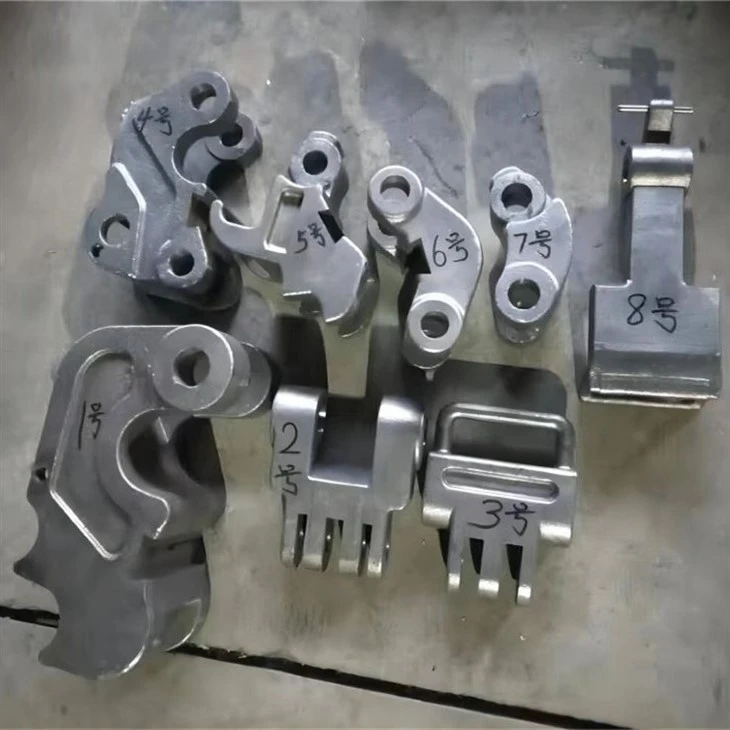
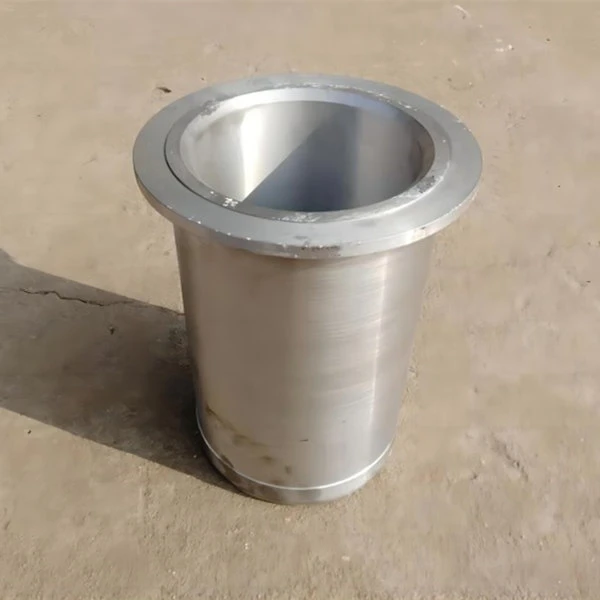
As a supplier of Grey Cast Iron Parts, we offer a wide range of products, including Ball Grinding Cast Iron Parts, Film Mulching Sand Castings, and High Chromium Cast Iron Parts.
We understand the importance of elongation for different applications, and we have optimized our manufacturing processes to ensure that our products meet the required mechanical properties. For each type of product, we carefully control the chemical composition, cooling rate, and heat treatment to achieve the best balance between strength, hardness, and elongation.
For example, our Ball Grinding Cast Iron Parts are designed to withstand the abrasive wear in grinding applications. While these parts need high hardness, we also ensure that they have a certain level of elongation to resist the impact forces during the grinding process. Our Film Mulching Sand Castings are used in agricultural applications, where they need to be able to withstand some bending and impact loads. By controlling the manufacturing parameters, we can provide these castings with appropriate elongation values.
5. Measuring and Controlling Elongation in Production
5.1 Measuring Elongation
We use standardized tensile testing methods to measure the elongation of our Grey Cast Iron Parts. Tensile specimens are prepared according to relevant standards such as ASTM or ISO. These specimens are then tested using a universal testing machine. The machine applies a gradually increasing load to the specimen until it fractures. The data collected during the test, including the initial and final lengths of the specimen, are used to calculate the elongation percentage.
5.2 Controlling Elongation
To control the elongation of our products, we have a strict quality control system in place. We closely monitor the chemical composition of the molten metal during the melting process. We use spectrometers to analyze the elements in the melt and make adjustments as needed.
During the casting process, we use advanced cooling techniques to ensure a uniform cooling rate. This helps in achieving a consistent microstructure throughout the part. After casting, heat treatment is carried out in well - controlled furnaces. The temperature and time parameters of the heat treatment are carefully selected based on the product requirements.
6. Contact Us for Your Grey Cast Iron Part Needs
If you are in the market for high - quality Grey Cast Iron Parts, we are here to help. Our team of experts can provide you with detailed information about the elongation and other mechanical properties of our products. We can also work with you to customize the parts according to your specific requirements. Whether you need Ball Grinding Cast Iron Parts, Film Mulching Sand Castings, or High Chromium Cast Iron Parts, we have the experience and capabilities to meet your needs. Please feel free to contact us for more information and to start a procurement discussion.
References
- ASM Handbook Volume 1: Properties and Selection: Irons, Steels, and High - Performance Alloys. ASM International.
- Fundamentals of Casting Technology by David Croll.
- "The Influence of Chemical Composition on the Mechanical Properties of Grey Cast Iron" - Journal of Materials Science and Technology.