




Application Of Grate Bars
 Aug 07, 2024|
Grate bars have a variety of applications in high-temperature furnace equipment, and they are key components for the normal and efficient operation of these furnaces. The following are the main applications of grate bars in high-temperature furnace equipment:
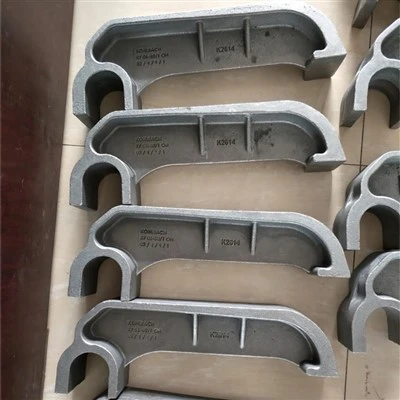
1. Support and distribution: Grate bars play the role of supporting materials in high-temperature furnaces, so that materials can be evenly distributed in the furnace. This helps the materials to be heated more evenly, thereby improving thermal efficiency. At the same time, the design of grate bars can also promote the flow of materials in the furnace and prevent materials from being blocked or forming dead corners.
2. Ventilation and combustion: The design of grate bars helps the air circulation in the furnace, so that the air can be fully mixed with the materials, thereby improving combustion conditions. Some grate bars are even designed with special ventilation holes or channels to promote air flow and combustion effects.
3. Slag breaking and slag discharge: During the operation of high-temperature furnaces, slag is produced when materials are burned. The design of grate bars helps to break and disperse these slags to prevent them from accumulating in the furnace. At the same time, grate bars can also serve as channels for slag discharge, so that the slag can be discharged smoothly out of the furnace.
4. Improve thermal efficiency: By rationally designing the shape, size and material of the grate bars, the heat conduction and convection in the furnace can be optimized, thereby improving thermal efficiency. In addition, the grate bars can also help reduce heat loss in the furnace and improve overall energy efficiency.
5. High temperature and corrosion resistance: The grate bars need to be able to withstand high temperatures and harsh combustion environments, so they are usually made of special alloy materials with high temperature oxidation resistance and corrosion resistance. This allows the grate bars to maintain stable performance under long-term high-temperature operation.