




What is the difference between sand casting and investment casting for mechanical castings?
 Oct 02, 2025|
 Hey there! As a supplier of mechanical castings, I often get asked about the differences between sand casting and investment casting. These two casting methods are widely used in the mechanical industry, each with its own unique features and applications. Let's dive right in and explore what sets them apart.
1. The Basics of Sand Casting and Investment Casting
First off, let's quickly understand what sand casting and investment casting are. Sand casting is one of the oldest and most common methods of casting. It involves creating a mold out of sand and then pouring molten metal into it. Once the metal cools and solidifies, the sand mold is broken away to reveal the casting.
On the other hand, investment casting, also known as lost - wax casting, has a more intricate process. It starts with creating a wax pattern of the desired part. This wax pattern is then coated with a ceramic material to form a shell. After the shell hardens, the wax is melted out, leaving a cavity. Molten metal is then poured into this cavity, and once it solidifies, the ceramic shell is removed.
2. Precision and Surface Finish
When it comes to precision, investment casting takes the lead. The process allows for extremely detailed and accurate parts. Since the wax pattern can be made with high precision, the final casting can replicate even the smallest features. This makes investment casting ideal for parts that require tight tolerances, such as Auto Parts. In the automotive industry, components need to fit together perfectly, and investment casting can deliver the necessary precision.

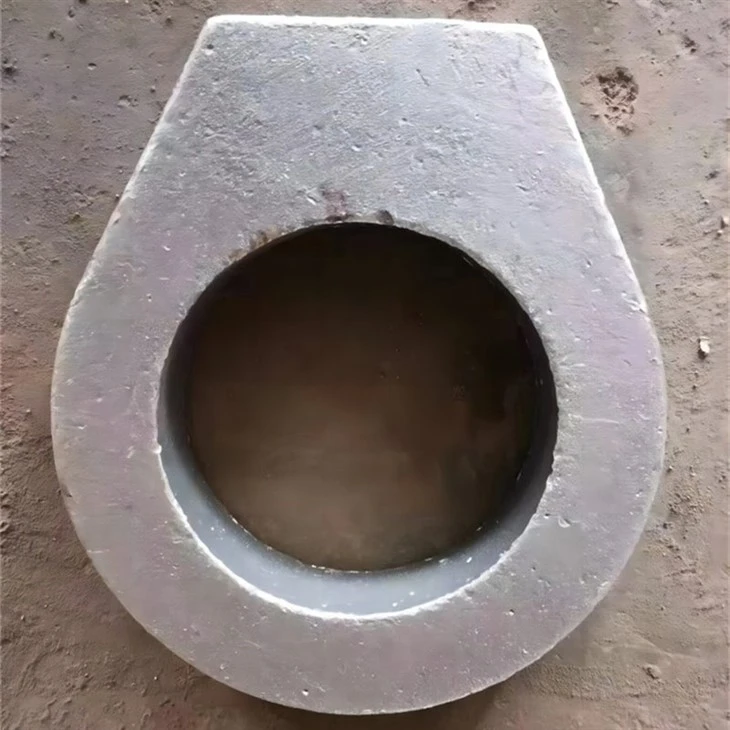
Sand casting, however, is not as precise. The nature of the sand mold means that there can be some variations in the final part dimensions. The surface finish of sand - cast parts is also generally rougher compared to investment - cast parts. Sand particles can leave marks on the surface of the casting. But hey, if you don't need super - tight tolerances and a smooth finish, sand casting can still get the job done.
3. Cost Considerations
Cost is always a big factor in manufacturing. Sand casting is usually more cost - effective for large - scale production of simple - shaped parts. The sand used in the mold is relatively inexpensive, and the equipment required for sand casting is also less complex. For high - volume orders of parts like Mine Fittings, sand casting can be a great choice as it can keep the production costs down.
Investment casting, on the other hand, is more expensive. The wax patterns, the ceramic shell materials, and the more complex process all contribute to higher costs. However, for small - batch production of complex parts, the cost per part may still be acceptable. It's all about finding the right balance between the cost and the quality requirements of your project.
4. Material Selection
Both sand casting and investment casting can work with a wide range of materials. But there are some differences in terms of what materials are more commonly used for each method.
Sand casting can handle a variety of metals, including iron, steel, aluminum, and brass. It's a versatile method that can be used for different types of mechanical parts. For example, Agricultural Machinery Parts made from iron or steel can be effectively produced using sand casting.
Investment casting is also compatible with many materials, but it's particularly well - suited for high - temperature alloys and precious metals. The precise nature of the process allows for the production of high - quality parts from these materials, which are often used in aerospace and jewelry industries.
5. Production Time
Production time is another aspect to consider. Sand casting generally has a shorter production cycle. Once the sand mold is prepared, the molten metal can be poured relatively quickly, and the part can be removed from the mold after cooling. This makes it a good option when you need parts in a hurry.
Investment casting, though, has a longer production time. The process of making the wax pattern, creating the ceramic shell, and melting out the wax all take time. So, if you're on a tight schedule, sand casting might be the way to go.
6. Complexity of Parts
When it comes to the complexity of parts, investment casting shines. It can produce parts with complex geometries, internal cavities, and thin walls that would be difficult or impossible to achieve with sand casting. The ability to create detailed wax patterns allows for the production of highly complex mechanical components.
Sand casting is better suited for simpler - shaped parts. While it can handle some level of complexity, the limitations of the sand mold make it less suitable for extremely intricate designs.
Conclusion
So, to sum it up, sand casting and investment casting are two different but valuable methods in the world of mechanical castings. Sand casting is great for large - scale production of simple parts, where cost - effectiveness and a relatively short production time are important. It can handle a wide range of materials and is a reliable option for many industries.
Investment casting, on the other hand, is the go - to for high - precision, complex parts. It offers excellent surface finish and can work with high - end materials, although it comes at a higher cost and longer production time.
If you're in the market for mechanical castings and are wondering which method is right for your project, don't hesitate to reach out. We're here to help you make the best decision based on your specific requirements. Whether you need Auto Parts, Mine Fittings, or Agricultural Machinery Parts, we've got the expertise to deliver high - quality castings.
References
- ASM Handbook, Volume 15: Casting, ASM International
- "Manufacturing Engineering & Technology" by S. Kalpakjian and S. R. Schmid