




What are the precision casting processes for parts?
 Dec 26, 2025|
Hey there! As a supplier of Precision Casting Parts, I'm often asked about the precision casting processes for parts. Today, I'm gonna share some insights on this topic and explain the different methods we use to create high - quality parts.
Investment Casting
Investment casting, also known as the lost - wax casting process, is one of the most common precision casting methods we use here. It's a super versatile technique that can make parts with high precision and excellent surface finish.
How does it work? Well, first, we create a wax pattern of the part we want to cast. This wax pattern has the exact shape and dimensions of the final part. Then, we dip the wax pattern into a ceramic slurry multiple times. Each dip is followed by a coating of a ceramic sand to build up a thick ceramic shell around the wax.
After the ceramic shell is dry and hard enough, we heat it in a furnace. The wax melts and drips out, leaving behind a cavity in the shape of the part. This is where the "lost - wax" term comes from. Then, we pour molten metal into the cavity. Once the metal cools and solidifies, we break away the ceramic shell, and there you have it - a precision - cast part.
Investment casting is great for parts with complex geometries. For example, we've used this process to create High Chromium Cast Iron Parts that need to have intricate details and very tight tolerances. It's also suitable for small - to medium - sized parts, and we can achieve a high level of accuracy, even down to a few thousandths of an inch.
Die Casting
Die casting is another process we work with. It's all about using dies, which are like metal molds. We have two types of die casting: hot - chamber die casting and cold - chamber die casting.
In hot - chamber die casting, the melting pot is attached to the die - casting machine. The molten metal is forced into the die using a piston. This process is really fast, and it's great for casting parts made from metals like zinc, lead, and magnesium.
On the other hand, cold - chamber die casting is used for metals that can't be in contact with the hot chamber, such as aluminum, brass, and copper. With this method, the molten metal is ladled into a cold - chamber and then injected into the die.
Die casting is awesome for mass - producing parts. It can make parts with excellent dimensional stability. We've used it to create Ball Grinding Cast Iron Parts in large quantities. The parts come out with a smooth surface finish, and the production speed is impressive. However, the initial cost of making the dies can be quite high, but it pays off when you're producing a large number of parts.
Shell Molding
Shell molding is a casting process that uses a resin - coated sand to form the mold. The sand is mixed with a thermosetting resin, and then it's heated to form a hard shell.
The process starts by heating a pattern, usually made of metal. Then, the resin - coated sand is blown or dumped onto the hot pattern. The heat from the pattern causes the resin to cure, and a hard shell forms around the pattern. After the shell is formed, it's removed from the pattern. Two half - shells are then joined together to form a complete mold. Molten metal is poured into the mold, and once it cools, the shell is broken away to reveal the part.
Shell molding is known for producing parts with good surface finish and dimensional accuracy. It's a good option for medium - sized production runs. We've used this process for some of our Bimetal Composite Hammer Head products. The shells are reusable to some extent, which can help reduce costs.
Sand Casting
Sand casting is one of the oldest and simplest casting processes. It uses sand as the main molding material. We create a mold by packing sand around a pattern. The pattern is removed, leaving a cavity in the sand. Then, molten metal is poured into the cavity.
There are different types of sand casting, like green sand casting and no - bake sand casting. Green sand casting uses a mixture of sand, clay, and water. The "green" in the name means that the mold is damp when the metal is poured. No - bake sand casting uses a chemical binder in the sand, which hardens at room temperature without the need for heating.
Sand casting is cost - effective, especially for large - sized parts or low - volume production. It's a flexible process that can handle a wide range of metals. However, the surface finish of the parts is usually not as good as the parts made by investment casting or die casting, and the dimensional accuracy is also a bit lower.
Centrifugal Casting
Centrifugal casting is a unique process. It uses centrifugal force to distribute the molten metal in the mold. We place the mold on a spinning device, and as it spins, we pour the molten metal into the mold.
The centrifugal force makes the molten metal spread evenly along the inner surface of the mold. This results in parts with a dense and uniform structure. Centrifugal casting is often used for making cylindrical parts, like pipes and tubes.
The advantage of this process is that it can produce parts with excellent mechanical properties. The centrifugal force helps to eliminate porosity and other defects in the metal. It's also a relatively efficient process for certain types of parts.
Factors Affecting the Choice of Casting Process
When we're deciding which casting process to use for a particular part, there are several factors we consider.
First, the complexity of the part's geometry is crucial. If the part has very intricate details and tight tolerances, investment casting might be the best choice. For simple - shaped parts that need to be produced in large quantities, die casting or sand casting could be more suitable.
The material of the part also matters. Different metals have different melting points, fluidity, and other properties. For example, some metals are better suited for die casting, while others work well with investment casting.
The production volume is another important factor. If we're making just a few parts, we might opt for a process like investment casting or sand casting. But if it's a mass - production job, die casting or centrifugal casting could be more efficient.
Cost is always a consideration. Different casting processes have different costs associated with them, including the cost of molds, equipment, and labor. We need to balance the quality requirements with the budget.
Wrapping Up
In conclusion, there are several precision casting processes available, each with its own advantages and disadvantages. As a Precision Casting Parts supplier, we carefully select the right process for each order based on the part's requirements.

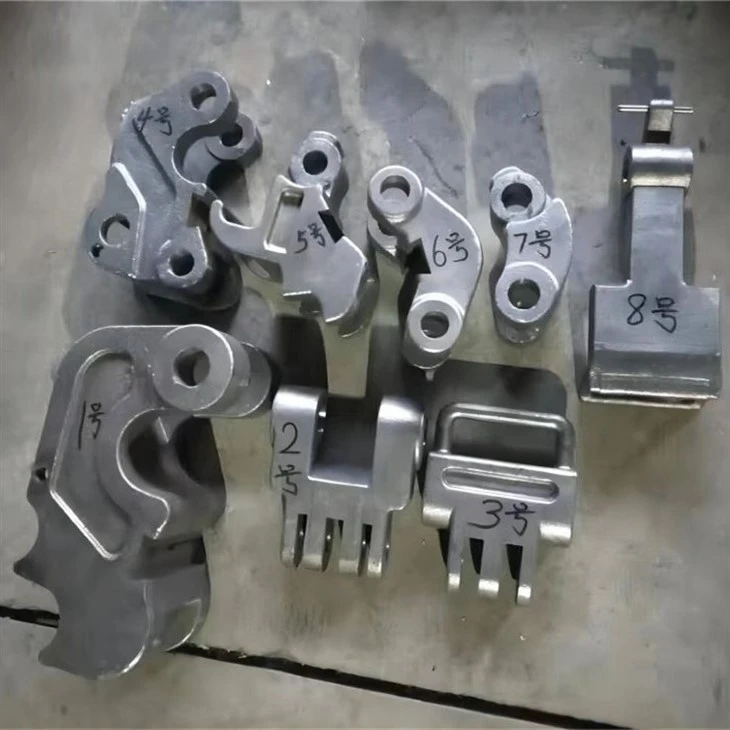
Whether you need High Chromium Cast Iron Parts, Ball Grinding Cast Iron Parts, or Bimetal Composite Hammer Head, we have the expertise and the right casting process to meet your needs.
If you're looking for high - quality precision - cast parts, don't hesitate to reach out for a purchasing negotiation. We're here to provide you with the best solutions and products in the market.
References
- Kalpakjian, S., & Schmid, S. R. (2009). Manufacturing Engineering and Technology. Pearson.
- Campbell, J. (2012). Castings. Butterworth - Heinemann.