




What are the differences between film mulching sand castings and lost foam casting?
 Oct 14, 2025|
 When it comes to casting methods in the manufacturing industry, film mulching sand castings and lost foam casting are two prominent techniques, each with its unique characteristics, advantages, and limitations. As a supplier of film mulching sand castings, I have had the privilege of witnessing firsthand the intricacies of these processes and understanding their differences. In this blog, I will delve into the disparities between film mulching sand castings and lost foam casting, providing insights that can help you make informed decisions for your casting needs.
Process Overview
Film Mulching Sand Castings
Film mulching sand casting is a traditional casting method that has been used for centuries. The process begins with the creation of a pattern, which is typically made of wood, metal, or plastic. This pattern is then placed in a flask, and sand is packed around it to form a mold. A thin film is often applied to the sand surface to improve the mold's surface finish and prevent sand from adhering to the casting. Once the mold is prepared, molten metal is poured into the cavity left by the pattern. After the metal solidifies, the mold is broken, and the casting is removed.

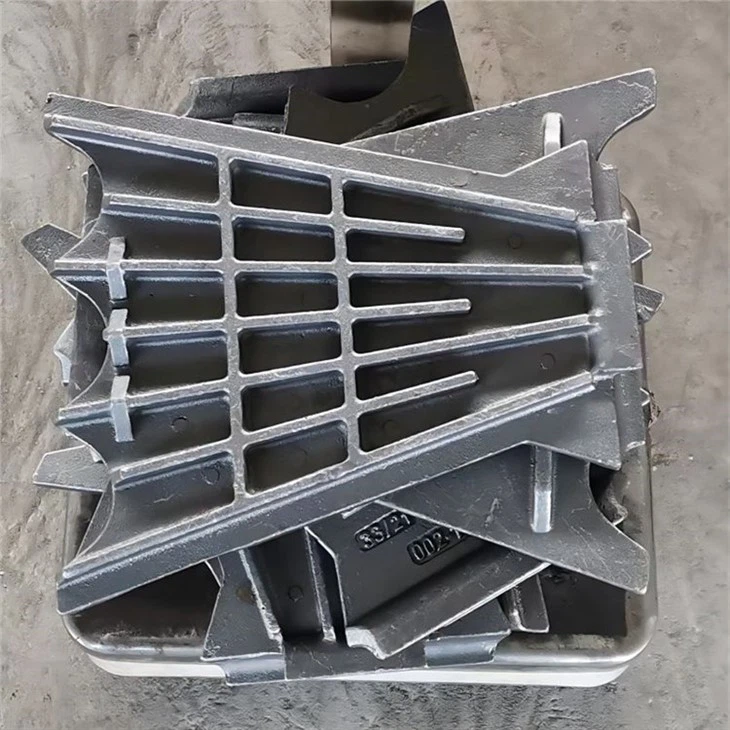
One of the key advantages of film mulching sand casting is its versatility. It can be used to produce a wide range of parts, from small, intricate components to large, heavy-duty castings. The process is also relatively simple and cost-effective, making it a popular choice for both small-scale and large-scale production. Additionally, film mulching sand castings can be made from a variety of metals, including Grey Cast Iron Parts, steel, aluminum, and bronze.
Lost Foam Casting
Lost foam casting, also known as evaporative pattern casting, is a more modern casting technique that was developed in the 1950s. In this process, a pattern is made from expanded polystyrene (EPS) foam. The foam pattern is coated with a refractory material to form a mold. The coated pattern is then placed in a flask and surrounded by loose sand for support. Molten metal is poured into the mold, and as the metal contacts the foam, the foam vaporizes, leaving behind a cavity that is filled with the metal.
Lost foam casting offers several advantages over traditional casting methods. One of the main benefits is its ability to produce complex shapes with high precision. Since the foam pattern can be easily shaped, it allows for the creation of parts with intricate details and internal features that would be difficult or impossible to achieve with other casting methods. Lost foam casting also eliminates the need for cores, which simplifies the casting process and reduces the risk of casting defects. Additionally, the process produces less waste and requires less finishing work, resulting in cost savings and shorter production times.
Surface Finish and Dimensional Accuracy
Film Mulching Sand Castings
The surface finish of film mulching sand castings can vary depending on several factors, such as the type of sand used, the quality of the pattern, and the casting process parameters. Generally, the surface finish of sand castings is rougher compared to other casting methods, such as lost foam casting. However, the use of a film on the sand surface can help improve the surface finish by reducing the adhesion of sand particles to the casting.
In terms of dimensional accuracy, film mulching sand castings can achieve a moderate level of precision. The accuracy of the casting is influenced by factors such as pattern shrinkage, mold expansion, and the pouring process. While sand casting can produce parts with relatively tight tolerances, it may not be suitable for applications that require extremely high precision.
Lost Foam Casting
Lost foam casting is known for its excellent surface finish and high dimensional accuracy. The smooth surface of the foam pattern translates into a smooth surface finish on the casting. Additionally, the absence of parting lines and cores in lost foam casting reduces the risk of surface defects and improves the overall quality of the casting.
In terms of dimensional accuracy, lost foam casting can achieve very tight tolerances. The process allows for the production of parts with complex shapes and internal features with high precision. This makes lost foam casting a preferred choice for applications that require parts with strict dimensional requirements, such as aerospace and automotive components.
Production Efficiency and Cost
Film Mulching Sand Castings
Film mulching sand casting is a relatively simple and cost-effective casting method. The equipment required for sand casting is relatively inexpensive, and the process can be easily scaled up or down depending on the production volume. Additionally, sand casting allows for the use of recycled sand, which further reduces the cost of production.
However, sand casting can be a labor-intensive process, especially for complex parts. The preparation of the mold and the removal of the casting from the mold require manual labor, which can increase the production time and cost. Additionally, the surface finish of sand castings may require additional finishing work, such as grinding and machining, which can add to the overall cost of the part.
Lost Foam Casting
Lost foam casting offers high production efficiency and cost savings in certain applications. The process eliminates the need for cores and parting lines, which simplifies the casting process and reduces the production time. Additionally, the use of foam patterns allows for the rapid prototyping of parts, which can accelerate the product development cycle.
However, lost foam casting requires specialized equipment and materials, which can be more expensive compared to traditional casting methods. The cost of the foam pattern and the refractory coating can also add to the overall cost of the casting. Additionally, the process may require more energy and resources compared to sand casting, which can impact the environmental sustainability of the production.
Material Compatibility
Film Mulching Sand Castings
Film mulching sand casting can be used with a wide range of metals and alloys, including High Chromium Cast Iron Parts, steel, aluminum, and bronze. The process is suitable for both ferrous and non-ferrous metals, making it a versatile choice for various industries.
The choice of metal for sand casting depends on several factors, such as the mechanical properties required for the part, the operating environment, and the cost. Different metals have different casting characteristics, and the casting process may need to be adjusted accordingly to ensure the quality of the casting.
Lost Foam Casting
Lost foam casting is also compatible with a variety of metals, including steel, aluminum, and iron. However, the process may have some limitations when it comes to certain metals, such as high-melting-point alloys. The vaporization of the foam pattern requires a certain amount of heat, and some metals may not be able to provide enough heat to completely vaporize the foam, resulting in casting defects.
In addition, the refractory coating used in lost foam casting must be compatible with the metal being cast to prevent chemical reactions and ensure the quality of the casting. Therefore, the choice of metal and the refractory coating must be carefully considered to ensure the success of the lost foam casting process.
Applications
Film Mulching Sand Castings
Film mulching sand castings are widely used in various industries, including automotive, construction, agriculture, and machinery. Some common applications of sand castings include engine blocks, transmission housings, pump bodies, and agricultural equipment parts. The versatility and cost-effectiveness of sand casting make it a popular choice for producing large quantities of parts with moderate precision requirements.
Lost Foam Casting
Lost foam casting is commonly used in industries that require high-precision parts with complex shapes, such as aerospace, automotive, and defense. Some typical applications of lost foam casting include engine components, turbine blades, and aerospace structural parts. The ability of lost foam casting to produce parts with intricate details and internal features makes it ideal for applications where traditional casting methods may not be suitable.
Conclusion
In conclusion, film mulching sand castings and lost foam casting are two distinct casting methods, each with its own set of advantages and limitations. Film mulching sand casting is a versatile and cost-effective method that is suitable for a wide range of applications, especially those that require moderate precision and a relatively simple casting process. Lost foam casting, on the other hand, offers high precision and the ability to produce complex shapes, making it a preferred choice for applications that demand high-quality parts with intricate details.
As a supplier of film mulching sand castings, I understand the importance of choosing the right casting method for your specific needs. Whether you are looking for a cost-effective solution for large-scale production or a high-precision casting for a complex application, I can provide you with the expertise and support you need to make an informed decision. If you are interested in learning more about our film mulching sand casting services or have any questions about the casting process, please feel free to contact me for a consultation. We look forward to the opportunity to work with you and provide you with high-quality castings that meet your requirements.
References
- Campbell, J. (2003). Castings. Butterworth-Heinemann.
- Kalpakjian, S., & Schmid, S. R. (2013). Manufacturing Engineering and Technology. Pearson.
- Flemings, M. C. (1974). Solidification Processing. McGraw-Hill.